Pregnancy Diet by Trimester: Balanced Meals and Practical Choices
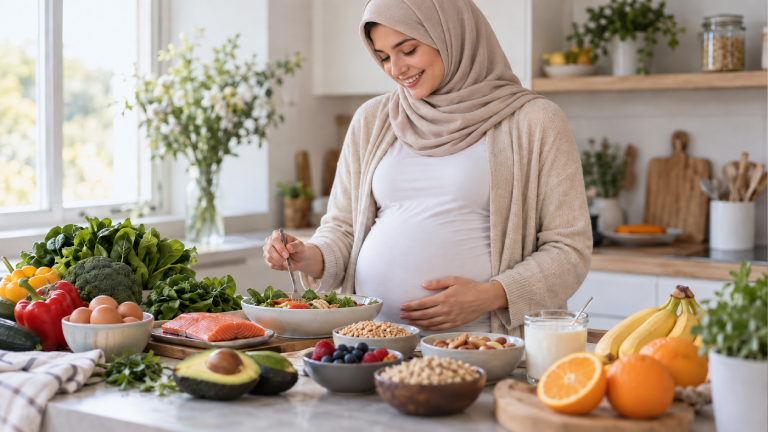
A pregnancy nutrition plan takes account of pregnancy stage, appetite, weight and test results rather than doubling food intake. Variety and individual requirements matter more than a fixed menu for every expectant mother.
It is important to review pregnancy nutrition needs with your pregnancy doctor, especially with anaemia, persistent vomiting or a long-term condition. Supplements follow recommendations and results; they do not replace a balanced diet.
This guide shares ways to plan meals during pregnancy in the UAE and Gulf using accessible foods and personalised portions. No diet guarantees prevention of gestational diabetes or pregnancy complications.
How do needs change during pregnancy?
Energy and nutrient needs develop with pregnancy and maternal health, so your pregnancy meal plan should be reviewed at each stage:
- The early months: Focus on varied foods and the folic acid supplement recommended by your doctor. A large increase in food is usually unnecessary.
- The middle months: Review energy, protein, iron and calcium as pregnancy progresses, according to appetite, weight and results.
- The final months: Maintain variety with comfortable meals and review glucose and weight as part of pregnancy care.
First trimester: nausea, appetite and daily choices
In early pregnancy, balanced meals provide nourishment, with meal sizes adapted if nausea makes eating difficult:
Foods to include for variety
- Well-washed leafy vegetables as a folate source
- Cooked lentils and beans for fibre and protein
- Whole fruit and vitamin C sources alongside iron-rich foods
- Simple foods you tolerate; check with your doctor before using herbal preparations
Making meals more comfortable
- Try smaller, more frequent portions according to appetite
- Avoid smells or foods that worsen your nausea
- Spread fluids through the day; persistent vomiting or dehydration needs medical assessment
Second trimester: reviewing iron and calcium
Nausea may ease during this stage, and varied meals can make it easier to meet needs. Continue weight and blood-test review rather than taking unprescribed supplements.
- Iron sources: Well-cooked lean meat and pulses with a vitamin C source. Avoid liver and liver products during pregnancy because of their high vitamin A content.
- Calcium and vitamin D: Choose pasteurised dairy or suitable fortified alternatives and discuss vitamin D supplementation with your doctor.
- Fibre and fluids: Build vegetables and whole grains gradually with appropriate water intake. Discuss persistent constipation with your doctor.
Third trimester: meal comfort and glucose screening
As pregnancy progresses, food portions are adapted to needs, appetite, reflux and results. Gestational diabetes is not diagnosed from food choices, and diet alone cannot guarantee prevention.
Priorities for the final months
- Suitable protein with main meals
- Pregnancy-appropriate, well-cooked fish within your doctor’s guidance
- Iron and weight review based on assessment and tests
Organising carbohydrate intake
- Choose whole grains where appropriate and reduce added sugar
- Arrange portions around appetite and glucose results
- Balance carbohydrate foods with protein and vegetables
- Attend gestational diabetes screening and follow instructions if diagnosed
Four habits throughout pregnancy
Food quality before extra quantity
You do not need to double your meals. Energy requirements depend on pregnancy stage, weight, activity and health.
Vary your protein sources
Well-cooked eggs, meat and fish, pulses and pasteurised dairy can be chosen according to tolerance and requirements.
Spread fluids through your day
Keep water nearby, especially in UAE and Gulf heat, and adjust intake to your doctor’s advice.
Review your plan when needs change
Meals can be adapted for nausea, reflux or changing results. Individual follow-up is more suitable than copying a general menu.
Pregnancy food questions
Should I eat twice as much?
No. Requirements vary by pregnancy stage and individual health. Focus on variety and suitable portions, and review weight changes with your care team.
How do I know if I have gestational diabetes?
Diagnosis requires the tests your doctor requests, usually at weeks 24–28 or earlier according to risk. A balanced diet does not remove the need for screening.
Choose a plan around your pregnancy and daily life
Dr. Doaa Ahmed Sabry offers online nutrition support for people in the UAE and Gulf, adapting meals to pregnancy stage and medical guidance.
Related support: Pregnancy Nutrition Programmewith Dr. Doaa Ahmed Sabry.
Share pregnancy stage, test results and current treatment when booking. Diagnosed gestational diabetes requires a separate suitability review.