
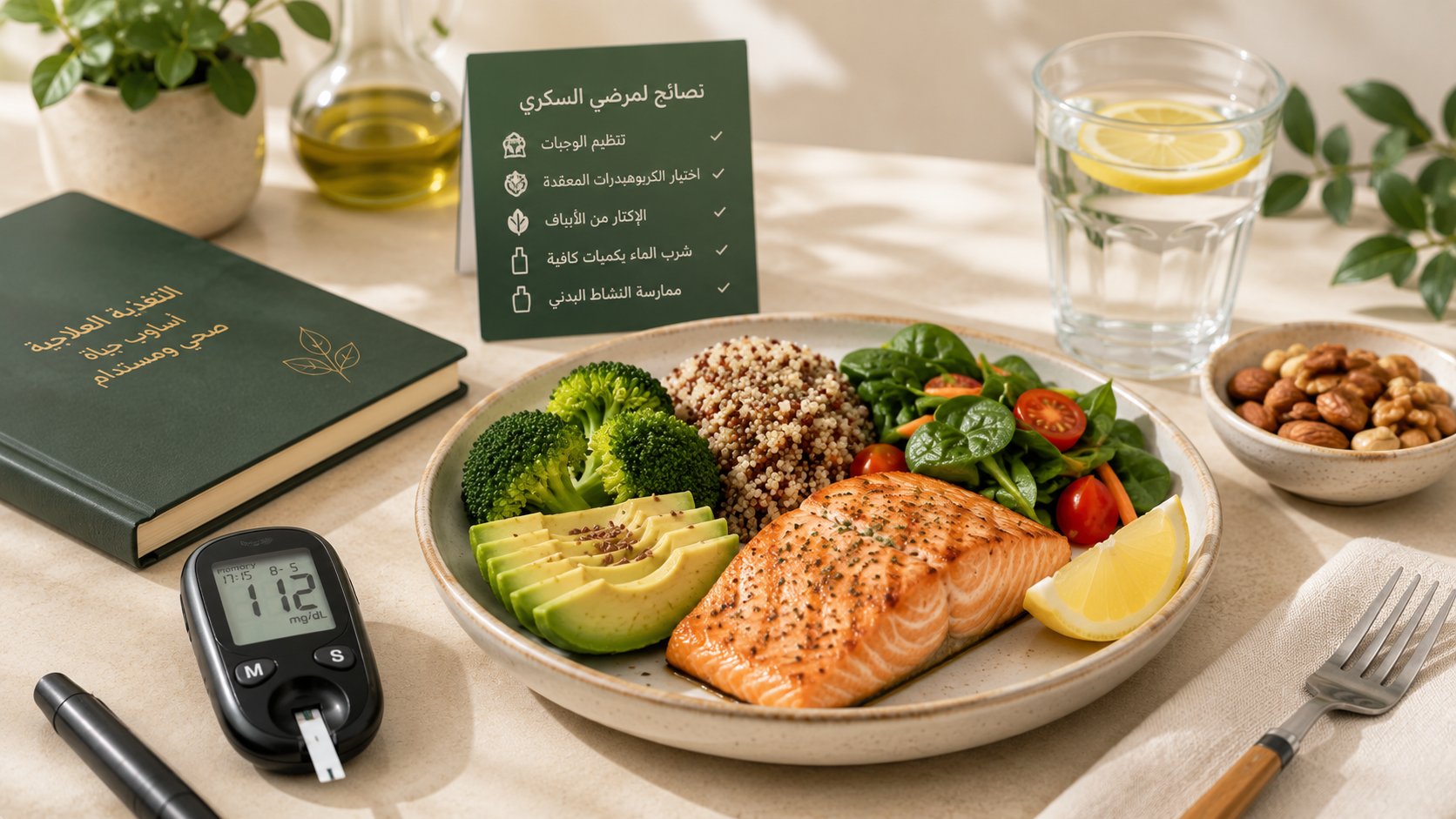
Diabetes Diet: Portions and Meals That Fit Your Daily Life
Food planning is part of diabetes care alongside treatment and monitoring. A suitable approach considers diabetes type, medicines, glucose readings and nutritional needs rather than avoiding all carbohydrate foods.
This guide shares practical options for people in the UAE and Gulf, from home meals to eating out, with personalised portions and no changes to prescribed treatment without your doctor.
Start by reviewing health history, meals, treatment and results to set realistic goals such as:
- Supporting the glucose targets set by your doctor
- Improving meal quality and everyday habits
- Managing weight where needed without excessive restriction
- Considering heart, kidney and accompanying health needs
Plans differ with age, diabetes type, activity and treatment, particularly insulin or medicines that may cause low glucose. Do not copy someone else’s menu.
Varied non-starchy vegetables
These add variety and fibre, chosen according to tolerance and any kidney guidance. Examples include:
- Fresh or cooked broccoli
- Spinach in an appropriate portion
- Cucumber with meals or salads
- Courgette prepared with modest added fat
- A variety of coloured peppers
- Well-washed lettuce
Protein matched to your needs
Choose variety and suitable portions, adjusting amounts for kidney disease or other requirements:
- Cooked lower-fat chicken
- Fish such as salmon or sardines
- Eggs prepared appropriately
- Lentils, chickpeas or other pulses
- Unsweetened milk or yogurt where suitable
Grains and carbohydrate choices
Whole grains can add fibre, but portions still matter with options such as:
- Measured unsweetened oats
- Brown rice in a portion matched to your plan
- Bulgur as part of a meal
- Quinoa according to preference and serving size
- Wholegrain bread with label review
Whole fruit in suitable portions
Fruit is not automatically excluded. Choose whole fruit rather than juice and match portions to your plan and readings. Options include:
- A portion of apple
- An orange sized to your allowance
- A measured serving of berries
- A portion of pear
- Kiwi within your daily choices
Fat sources and serving sizes
Unsaturated fats can fit balanced meals, but quantities contribute to overall energy:
- Measured olive oil
- A moderate portion of avocado
- Unsalted almonds or walnuts
- Chia or flax seeds according to tolerance
Some choices provide substantial sugar, energy or salt. Review them within your overall pattern rather than assuming every food is forbidden:
- Sweetened drinks and juice
- Large or frequent servings of sweets
- Oversized portions of low-fibre pastries
- White rice beyond your suitable portion
- Frequent fried potatoes
- High-energy or salty ready meals
- Products containing trans fats
Kabsa, machboos, bread and dates can be adapted to measured portions. Food type alone does not determine its effect; quantity, meal composition and treatment also matter.
Choose steps that fit your day and review them professionally, especially when treatment is linked to food timing:
- Arrange meal times around work and medicines
- Avoid delaying meals linked to treatment doses without guidance
- Include an appropriate amount of vegetables
- Add protein matched to your needs
- Choose suitable unsweetened fluids
- Use simple tools to understand portions
There is no rule requiring complete avoidance for everyone with diabetes. Amount, type and timing are reviewed against your needs and readings.
An assessment can help you:
- Choose suitable fibre-rich sources
- Set rice, bread and fruit portions
- Coordinate timings with treatment
- Balance meals without assuming every glucose rise can be prevented
Regular activity may support diabetes care alongside meals and treatment by:
- Improving insulin sensitivity in some people
- Supporting glucose management with low-glucose precautions
- Helping weight management where appropriate
- Supporting heart health and fitness
Start gradually within your ability and medical advice. In the Gulf, choose cooler hours or indoor activity. Discuss monitoring and hypoglycaemia precautions when using glucose-lowering treatment.
Consider individual support with:
- Repeated readings outside your targets
- Unintended weight changes or weight management needs
- Diagnosed prediabetes or insulin resistance
- Raised blood pressure, lipid changes or kidney disease
- Difficulty organising meals around work and family
Follow-up helps organise and adapt meals. Diabetes diagnosis, medicine adjustments and treatment of acute high or low glucose remain the medical team’s responsibility.
Begin with a plan you can follow
Realistic meals, suitable portions and follow-up are more useful than long exclusion lists. Review results, medicines and habits before choosing an approach, then adjust gradually.
For repeated low glucose, severe symptoms or high readings with worsening health, follow your care team’s action plan and seek medical help. Do not wait for meal changes alone.
Book an online nutrition assessment with Dr. Doaa Ahmed Sabry for people in the UAE and Gulf. Share diabetes type, treatment and readings to review suitability.