
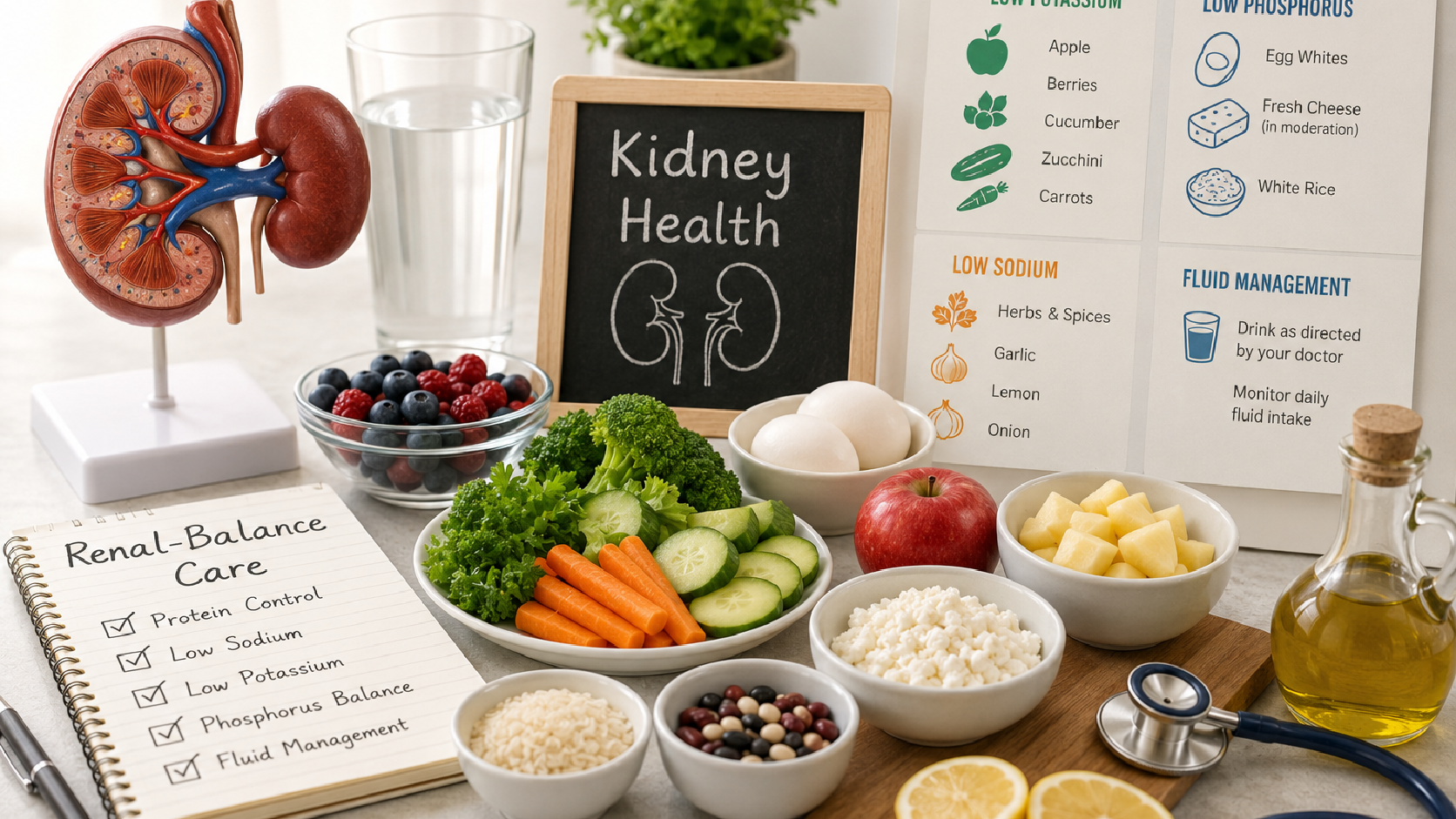
Kidney Disease Diet: Personalising Protein, Potassium and Salt
Your kidneys remove waste and help regulate fluid and minerals. As kidney function changes, the way your body handles protein, potassium, phosphorus and sodium may change too. One renal diet cannot suit everyone.
Nutrition forms part of the care directed by your kidney specialist. It supports nutritional needs and the management of some complications, but cannot guarantee delayed dialysis or restored kidney function. Needs differ before and during dialysis.
This guide explains how kidney nutrition depends on disease stage and recent results. For people in the UAE and Gulf, a plan can accommodate locally available foods and family meals without unnecessary restrictions.
Kidney assessment uses several tests, including estimated glomerular filtration rate, or eGFR. Your doctor interprets results in context; reduced function does not automatically mean avoiding all fruit, vegetables or meat.
The aim is adequate energy and nourishment, with adjustments for results, dialysis and medicines. Excessive restriction can contribute to malnutrition, particularly when appetite is poor.
Protein before and during dialysis
Protein may need adjustment before dialysis, while many people on dialysis require more. The amount depends on weight, nutritional status and treatment. Do not begin a low-protein diet without supervision.
Potassium guided by blood results
Not everyone with kidney disease needs to restrict potassium. If levels rise, the care team reviews food portions, medicines and salt substitutes. Severely raised potassium requires medical care.
Phosphorus and food additives
Raised phosphorus may require changes to food sources, especially additives in processed products. Your doctor decides whether medicines are needed; dietary changes do not replace prescribed phosphate binders.
Sodium and individual fluid needs
Reducing salt can help manage blood pressure and fluid retention. Fluid allowance depends on urine output, swelling, dialysis and medical advice. There is no single suitable amount for every patient.
| Nutrient | Sources to review if levels are raised | Options to discuss within your plan |
|---|---|---|
| Potassium | Dates, bananas, potatoes and tomatoes; content varies with portions and preparation | Measured portions of apples, berries or cucumber where appropriate |
| Phosphorus | Processed foods with phosphate additives, some cheeses and nuts | Egg whites and fresh foods in quantities matched to your needs |
| Sodium | Pickles, stock cubes, ready meals and salty canned foods | Lemon, garlic and cumin for flavour instead of extra salt |
- Choose protein sources and portions: Egg whites can suit some plans, but total daily protein matters more than relying on one food.
- Review vegetable preparation: Boiling and discarding the water may reduce some potassium in certain foods. It does not make unlimited portions suitable; ask about preparation and serving sizes.
- Read ingredient lists: Look for added phosphatesin processed products and discuss alternatives based on your blood results.
Should I stop eating protein?
No. Protein is needed to maintain muscle. Amounts are adjusted for disease stage, dialysis and nutritional status; complete avoidance can be harmful.
Are low-sodium salt substitutes suitable?
Some contain potassium chloride and may be unsuitable. Check with your kidney specialist before using them, particularly if potassium is raised.
Start with an assessment based on your results
Dr. Doaa Ahmed Sabry offers online nutrition follow-up for people in the UAE and Gulf, adapting meals to recent results and your kidney specialist’s guidance.
Relevant service: Kidney Nutrition Support with Dr. Doaa Ahmed Sabry.
Share your medical report and recent tests when booking so programme suitability can be reviewed before a plan is prepared.